-
 John G. Mistrot, MDSurgeryAccepting New PatientsView Profile
 -
Breanna Acero, PA-CSurgeryAccepting New PatientsView Profile
-
Gary Wertman, DOOrthopedicsAccepting New PatientsView Profile
-
Kevin C. Martin, PA-CView Profile
-
Mindy Merritt, MDOncology, SurgeryAccepting New PatientsView Profile
-
Katie White, NPView Profile
-
Jessica Lanier, NP-CSurgeryAccepting New PatientsView Profile
-
Sara L. Bishop, PA-CSurgeryAccepting New PatientsView Profile
-
Steven P. Kerner, DOUrologyAccepting New PatientsView Profile
-
Robert E. Coles, MDOrthopedics, Sports MedicineAccepting New PatientsView Profile
.jpg)







Surgical Services
State-of-the Art Facility with Leading-Edge Equipment
Advanced Robotic Surgery at Carteret Health Care
Experience the most advanced surgical technology—right here at home.
At Carteret Health Care, we are proud to offer the da Vinci 5® surgical system, the most advanced robotic-assisted surgery platform available today. With more than 150 breakthrough innovations, the da Vinci 5 is transforming how we perform minimally invasive surgery—delivering greater precision, smaller incisions, less pain, and faster recovery for our patients.
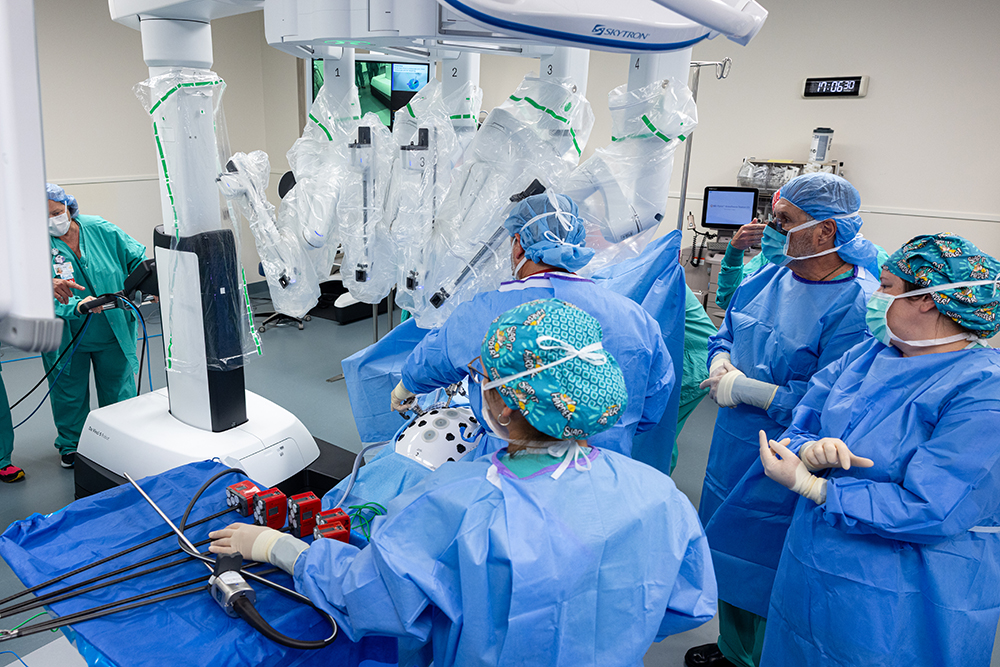
Why Choose Robotic Surgery at Carteret Health Care?
Our investment in advanced surgical technology means you no longer need to travel for cutting-edge care. The da Vinci 5 system is already being used by our highly trained surgical team for a range of procedures, including:
- Urology
- Gynecology
- Thoracic surgery
- General surgery
With the da Vinci 5, your surgeon is always in control, using robotic-assisted precision to perform delicate procedures through tiny incisions. This means less pain, reduced scarring, shorter hospital stays and quicker return to your normal activities.
How It Works
The da Vinci 5 system translates your surgeon’s hand movements into micro-movements using wristed instruments and 3DHD visualization—offering unmatched clarity, control, and comfort. As Carteret Health Care continues expanding its robotic-assisted surgical program, the da Vinci 5 will support a growing list of procedures, including:
- Bariatric (weight loss) surgery
- Hysterectomy
- Colorectal surgery
- Prostate procedures
- Hernia repairs
- Thoracic (chest/lung) surgeries
- And more
This future-ready platform is already advancing surgical care in Carteret County and will continue to bring expanded options for patients close to home.
Exceptional Care, Close to Home
Our mission is to deliver exceptional surgical care, right here in Carteret County. With the da Vinci 5 system, we’re bringing big-city surgical capabilities to our local community—backed by experienced surgeons you know and trust.
Learn More or Schedule a Consultation
If you are considering surgery or would like to know if robotic-assisted surgery is right for you, we’re here to help. Contact Carteret Health Care Surgical Group at 252-247-2101.
The Surgical Services department maintains 24-hour services to meet the needs of the surgical patient. The department consists of four areas:
- Operating room: The Operating Suite is located on the second floor and consists of five multipurpose rooms, one cysto/urology room, and two endoscopy rooms. Patients of all ages, outpatients and inpatients, may undergo general surgery, bariatrics, orthopedic, thoracic, vascular, ENT, ophthalmologic, urologic, dental, OB/GYN, podiatric procedures, and plastic surgery. Advanced techniques of surgical intervention include laparoscopic and laser surgery.
- Recovery room (post-anesthesia care unit): The Post-Operative Care Unit provides comprehensive care for all surgical patients recovering from local, regional, or general anesthesia. The RN staff is responsible for and skilled in assessing, planning, intervening, and evaluating patients in collaboration with the Anesthesia department and the surgeons. Most of all, the staff is sensitive to the patient's need to be assured that he will be cared for as a special person and help him understand what is occurring.
- Day Surgery Unit: Day Surgery Unit personnel are responsible for pre-admission teaching and evaluation of patients and families care throughout the patients stay and coordinating discharge instructions postoperative teaching and discharge. This unit is for patients who will be admitted, operated on and sent home, all within 24 hours.
- Anesthesia: The Anesthesia department of Carteret Health Care is under the direction of two physicians who are board certified anesthesiologists. The anesthesiologists or nurse anesthetists provides anesthesia service 24 hours a day for inpatients, outpatients, and emergency patients requiring surgical procedures. The types of services provided include care of the patient in the surgical setting along with emergency airway management in all areas of the hospital, standing by for women in labor utilizing epidurals, and acute postoperative pain management.
Common Surgical Services We Offer
Laparoscopic Procedures
These are surgeries specifically designed to be minimally invasive and perform diagnostics on the abdomen and pelvis. In the procedure, a long, thin camera is inserted through a small incision and examines the insides of a patient. This provides doctors a chance to see the insides of the body in real time without having to cut the patient completely open. In addition to diagnostics, a laparoscope can be used to assist various operations:
- Gall Bladder Surgery – In this operation, the doctor uses the laparoscope to guide the surgeon so they can make small, strategic incisions to remove the organ. Primarily used when a patient is suffering gallstones.
- Hernia – Again, this procedure involves the use of the laparoscope to give the surgeon a clear view of the patient’s insides and make incisions to repair the hernia. A mesh may be placed over the affected area to reinforce the internal structures.
- Appendectomy – The appendix can be removed without open surgery through use of the laparoscope. This operation requires as little as 3 incisions as the surgeon observes the procedure through the laparoscope video monitor.
Open Surgery
For patients uncomfortable with laparoscopic operations, or procedures in which a laparoscope will not suffice, our team is prepared to perform open surgery. This is the traditional surgical procedure in which an incision is made over the area in which the surgeon needs to operate and they view the worksite with their own eyes.
A doctor will almost always recommend a laparoscopic operation over open surgery if possible. The former carries less risk of infection and shorter recovery time for the patient.
Breast Biopsy
If a mammogram shows up with abnormal results, a breast biopsy may be ordered to determine whether or not a patient has breast cancer. There is no need to panic if your doctor recommends this procedure-- This is merely a test to find out once and for all after discovering other indicators that you may have it. There are a few different methods used to perform a biopsy.
- Fine Needle Aspiration Biopsy – In this relatively simple procedure, a very small needle is inserted into a breast lump and extracts a tissue sample to determine if it is a cyst or tumor.
- Core Needle Biopsy – These procedures are usually used in conjunction with an ultrasound. The doctor uses the ultrasound to guide a needle into the breast towards a lump that is visible on a mammogram.
- Surgical Biopsy – Though rare, surgery is sometimes required to access the mass for the doctor to extract a tissue sample.
Mastectomy
If a biopsy does prove positive for breast cancer, a mastectomy may be required. Mastectomies may be performed on both men and women diagnosed with breast cancer. It involves the complete removal of the breast to eliminate cancer. Some patients also have a mastectomy on a healthy breast to prevent cancer if they are at high risk for the disease.
In some cases the entire breast does not need to be removed and a lumpectomy can be performed. This operation only removes the cancerous mass in the breast. It is a less drastic procedure, but does come with increased risk of recurrence. A mastectomy can still be performed if breast cancer does manifest again.
Hemorrhoidectomy
Hemorrhoids are swollen veins in the lower rectum and anus that cause severe discomfort and pain for the affected. This procedure removes hemorrhoids. First the doctor will administer an anesthetic, then the hemorrhoids will be tied off and removed. Stitches may be required.
Though done in a surgical setting, patients are usually free to return home the same day. Total recovery from the operation takes anywhere from 2 to 6 weeks.